A frustrating airport experience comes at a significant cost, not just to passengers but to airports and airlines. It can dampen demand for air travel, while long lines and confusing wayfinding leave passengers with less time and inclination to spend money at concessions. Gate areas, service counters, and other spaces that generate little or no direct revenue must be oversized to accommodate passengers overwhelmed by their surroundings and reluctant to explore. Staffing levels need to accommodate an unpredictable mix of passengers with urgent needs and those seeking routine assistance. Passengers frustrated by their airport experience often board their flights with a negative impression that can carry over into their overall travel experience.
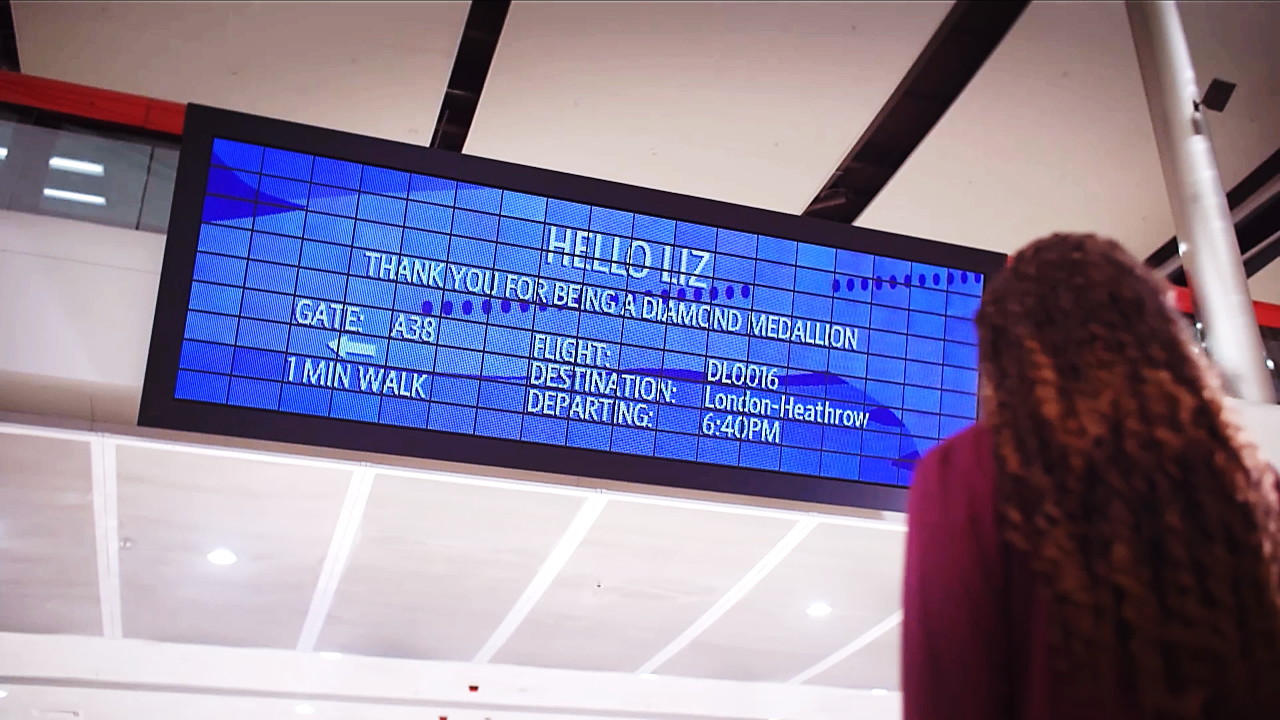
Our portfolio company, Misapplied Sciences, developed Parallel Reality™ technology to put smiles on passengers’ faces while helping airports and airlines improve profitability. Its multi-view displays serve as a personal concierge for every passenger viewing the same digital screen. Each passenger receives information and assistance tailored to their preferred language and needs, while other passengers simultaneously see their own custom content on the same display. The company launched its technology with Delta Air Lines at Detroit Metropolitan Airport (DTW) and has since expanded to venues such as the Intuit Dome, home of the LA Clippers.
We spoke with co-founder and CEO Albert Ng about the technology, what its deployment at DTW demonstrated, and how it will reshape the airport experience.
SKY VC: Misapplied Sciences first launched Parallel Reality with Delta at Detroit Metropolitan Airport (DTW). How has the technology made a difference for airports, airlines, and travelers, and how do you expect to double down on the impact?
Albert Ng (Ng):
Parallel Reality technology lets airports deliver a personalized concierge experience to each visitor, without the hassle of gadgets, glasses, or complicated interfaces. In a world where technology usually means added complexity and steep learning curves, ours disappears into the background, leaving only the benefits. We make everything easy, simple, and fun.
Imagine a bustling terminal where the environment recognizes and serves you. Digital displays greet you by name and show your updated flight details, while wayfinding signs lead you to your gate and tell you how long it will take to get there, all in your preferred language. With Parallel Reality displays, a hundred passengers can share the same screen at once, and each gets their own information and assistance. There's no waiting your turn, since the displays help everyone at the same time, even as you and everyone around you are on the go.
Our initial deployment at DTW has guided hundreds of thousands of travelers through their airport journey, delighting passengers and boosting customer sentiment and brand affinity. Flying feels like magic again, like it did in the golden age of travel. Building on that success, we're launching new product lines that scale Parallel Reality experiences from curb to gate, so each passenger receives highly individualized guidance for their entire airport visit.
SKY VC: How do you see your technology shaping the future of travel, and what opportunities are you most excited about? When a new aviation customer chooses to work with you, what are the most important factors guiding their decision?
Ng:
Our launch proved a single personalized display can dramatically reduce passenger stress at a major airport. Now we're expanding that capability with connected displays throughout the airport journey, including security checkpoints, concession areas, international arrival halls, lounges, and gates.
By eliminating the confusion and frustration passengers feel, Parallel Reality technology can free front-line staff to focus on passengers with more complex problems, so everyone gets the attention they deserve. When passengers feel informed, confident, and delighted, they're more likely to visit concessions than hug their gate, which in turn gives operators a reason to expand airport offerings. The airport becomes more appealing for passengers to return to, and more productive and profitable for operators.
Other factors that attract customers to our technology include operational robustness, simple retrofitting, easy integration with flight data infrastructure, a privacy-first architecture with no permanent storage of personal data, low power consumption, and improved passenger satisfaction.
SKY VC: You've since brought Parallel Reality into venues beyond aviation, including the Intuit Dome for the LA Clippers. What have you learned as the technology has been adopted across industries? What other fields do you think have the most compelling use cases for Misapplied Sciences?
Ng:
Deploying at the Intuit Dome confirmed how well our Parallel Reality system performs with thousands of fans pulsing through a constrained space in a short period of time. More broadly, it reminded us how well the technology serves a basic need at any complex venue: people want to be confident about where they are and where they're going. They want to feel oriented and in control.
That supports a visitor's sense of well-being and also affects how a space functions. Confusion creates bottlenecks, stalling, and backtracking, so the space isn't used to its full potential. Visitors can't spend their time on the things that brought them there, like cheering on their team or buying treats and souvenirs, and other necessities, like finding a restroom or getting back to their car, become frustrating.
We see massive opportunities across environments such as hospitality, themed entertainment, healthcare, and convention centers to make visitors happier and more likely to return, while also making the venue more productive and profitable.
SKY VC: Looking ahead, what key priorities or initiatives are shaping Misapplied Sciences, and how do you see the company evolving in the coming years?
Ng:
Single personalized displays in large, complex venues offer many benefits, but for us they largely serve as proof of concept. Right now, our priority for airports is deploying terminal-wide display networks that handle complex operational challenges, such as streamlining passenger flows in international arrival halls and immigration queues.
In the coming months and years, Misapplied Sciences will evolve from pioneering its display technology to providing the foundational software, hardware, and experience design for shared-space personalization. We're building a future where any public venue can interact with every guest on a personal, non-invasive level that makes their visit more rewarding, memorable, and worth repeating, while making the venue itself more effective, inclusive, and profitable.